
Kato Paphos: The Mediterranean's Quiet Overperformer
Kato Paphos: The Mediterranean Micro-Market Most Investors Overlook
If you track European coastal property markets closely, you know the usual names. The Algarve. The Côte d'Azur. Limassol. These are the markets that dominate the headlines, attract the institutional money, and carry the price tags to match.
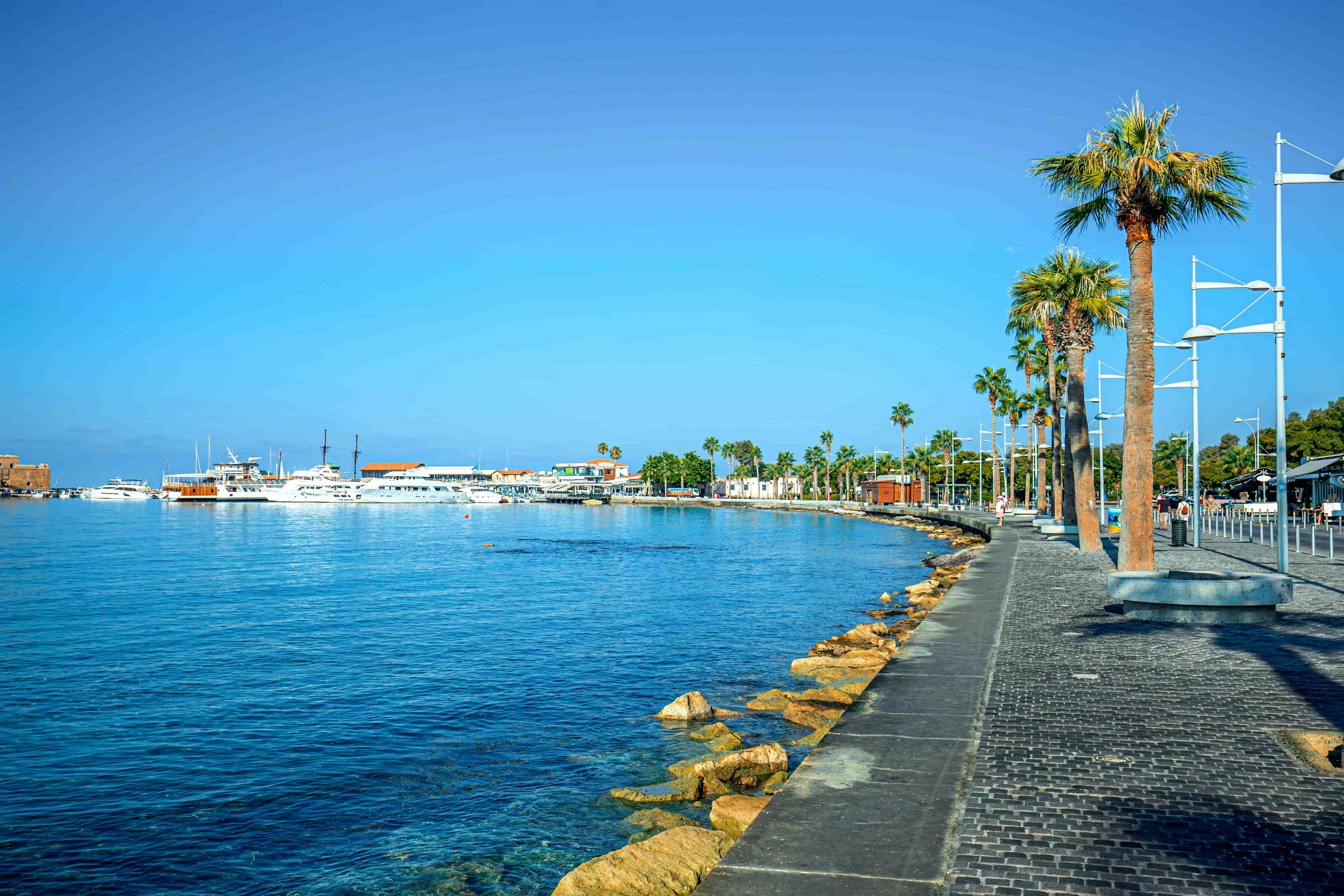
Kato Paphos does not dominate the headlines. It sits quietly on Cyprus's southwestern coast, a walkable waterfront neighbourhood anchored by a UNESCO-listed archaeological park, a working harbour, and more direct flights from European cities than most people realise. It is the tourist and expat heart of Paphos — and by a growing body of evidence, it is one of the most competitively priced, reliably yielding coastal micro-markets in the entire Mediterranean.
Here is the case.
Explore Kato Paphos properties on Sweet Home
The Numbers First
Paphos district recorded 12.9% annual price growth in 2025 — the strongest performance of any district in Cyprus. Apartment prices specifically rose 14.4% year-on-year, and new-build sales surged 68% in volume. These are not speculative numbers from a fringe market. They come from a district now representing 28% of the entire Cyprus property market by value, up from a smaller share in prior years.
Within Paphos, Kato Paphos and the adjacent Universal neighbourhood are consistently identified as the fastest-growing micro-markets in the district, with price growth running at 5–7% annually in recent quarters. The current average price per square metre in Kato Paphos sits at approximately €3,200 for standard apartments — rising to €4,500–€6,500/m² on the seafront strip. A modern one-bedroom apartment starts from around €150,000. A two-bedroom closer to the sea typically falls between €220,000 and €350,000.
For context: comparable coastal property in prime Limassol commands €4,500–€8,000/m². The price gap between the two markets is 30–40%. That gap has been narrowing — but it has not closed.
Why Kato Paphos Specifically — Not Just Paphos
Paphos is a district of around 90,000 residents spread across a mix of coastal neighbourhoods, hilltop villages, and inland suburbs. Not all of it performs equally. Kato Paphos is the engine of the market — and for specific, identifiable reasons.
Supply is structurally constrained. Coastal zoning laws tightened in 2023, slowing speculative development along the beachfront and protecting the value of existing stock. Land in Kato Paphos is genuinely scarce. New high-rise developments are only just beginning to emerge — the first towers in the neighbourhood broke ground recently — which means the pipeline of competing supply is limited relative to demand.
Rental demand is dual-layered. Kato Paphos draws two completely distinct tenant pools: tourists seeking short-term holiday lets during Cyprus's eight-month sun season, and a permanent community of British expats, remote workers, EU professionals, and students from local university campuses who create year-round residential demand. That dual demand is what separates Kato Paphos from purely seasonal resort markets — and it is what keeps occupancy rates high even outside summer.
Liquidity is exceptional. More than 60% of all Paphos property transactions involve foreign buyers. Kato Paphos, as the district's most internationally recognisable postcode, carries the deepest buyer pool and the strongest resale market. When it comes time to exit, you are not selling to a thin local market.
The Yield Picture: Two Different Returns Depending on How You Play It
This is where Kato Paphos genuinely separates itself from most Mediterranean alternatives — and where understanding the structure of the local market matters.
Long-term residential letting — typically to expats, remote workers, or local professionals — generates gross yields of 5–6.5% in Kato Paphos, comfortably above the Cyprus national average of approximately 5.4% and significantly above the 3–4% typical in comparable markets in Greece or Portugal. A two-bedroom apartment on a long-term lease can command €1,300–€1,500 per month.
Tourist-licensed short-term letting is where the numbers get more interesting. Fully furnished, tourism-licensed apartments in Kato Paphos generate between 6.5% and 8.5% gross annually during peak season — with well-positioned units potentially reaching higher during peak summer weeks. The same two-bedroom apartment on a short-term basis commands €1,800–€2,200 per month in season.
The trade-off is management complexity: short-term lets require either hands-on oversight or a professional property management arrangement, and licensing compliance is non-negotiable. Enforcement around short-term rental registration has been tightening across Cyprus, so this is not a passive strategy — but for buyers who structure it correctly, the income differential is meaningful.
One important nuance: there is evidence of short-term rental oversaturation in specific micro-pockets of Kato Paphos — particularly the backstreet clusters near the bar and restaurant strip. The strongest yields come from well-located apartments with genuine proximity to the harbour and beach, not from any property that happens to carry a Kato Paphos address. Location within the neighbourhood matters as much as the neighbourhood itself.
The Infrastructure Catalyst Nobody Is Pricing In Yet
In November 2025, construction began on a €220 million expansion of Paphos International Airport. The project will increase terminal capacity by approximately 30%, add rapid-exit taxiways, six new departure gates, and an enlarged immigration hall — raising the airport's total passenger throughput to 5 million annually upon completion in mid-2027.
This matters for property investors for a specific reason: Paphos's single biggest vulnerability as a rental market has always been the winter season. The airport expansion is explicitly designed to address this — increasing capacity for year-round routes to Central Europe and the Gulf, and directly supporting the government's strategy of extending the tourist season beyond its traditional summer peak. The Cypriot Chamber of Commerce has specifically identified winter tourism growth as one of the primary expected benefits.
Schengen accession — for which Cyprus is actively completing internal procedures — adds a further demand layer. The new immigration hall at Paphos Airport is already being wired for automated biometric e-gates in preparation. When Schengen access materialises, the frictionless travel benefit will fall disproportionately on Paphos, which draws the highest concentration of non-Schengen buyers of any Cyprus district.
These are not distant promises. They are funded, contracted, and under active construction. Property markets typically price infrastructure improvements after completion — not before. Buyers who move now are acquiring ahead of the re-rating.
What Kato Paphos Is Not
Clarity requires honesty about the trade-offs.
Kato Paphos is not Limassol. It does not have the corporate tenant base, the international business infrastructure, or the luxury seafront pipeline that makes Limassol the default choice for yield-maximising investors. If consistent, year-round corporate rental income is the primary objective, Limassol remains a stronger proposition.
Kato Paphos is also not a capital appreciation play in the same mould as an emerging market. The neighbourhood is established, well-understood by international buyers, and priced to reflect its qualities. The opportunity here is not undiscovered — it is undervalued relative to comparable Mediterranean markets, and strengthened by specific infrastructure catalysts that are now materialising.
The investor profile that fits Kato Paphos best is one who values a combination of things: a real, usable EU asset in an accessible location; competitive rental income from a dual market; a realistic residency pathway at the €300K threshold; and exposure to a market where the infrastructure investment is happening now and the price re-rating has not yet caught up.
Talk to a Cyprus property specialist at Sweet Home
The Case in Summary
Ten years of 55% price growth. The strongest district appreciation in Cyprus in 2025. Yields of up to 8.5% for well-positioned tourist-licensed units. Prices 30–40% below Limassol. A €220M airport expansion under construction. Coastal supply constrained by zoning. A dual rental market that generates income twelve months a year.
The Mediterranean is full of markets with one or two of these characteristics. Kato Paphos has all of them simultaneously — and it is still priced as though the rest of the world hasn't noticed.
Sweet Home works with international buyers who want to access Kato Paphos correctly — identifying the right properties within the neighbourhood, navigating the licensing and legal framework, and ensuring the numbers hold up before any commitment is made.