
How Smart Investors Buy Berlin at a 40% Discount
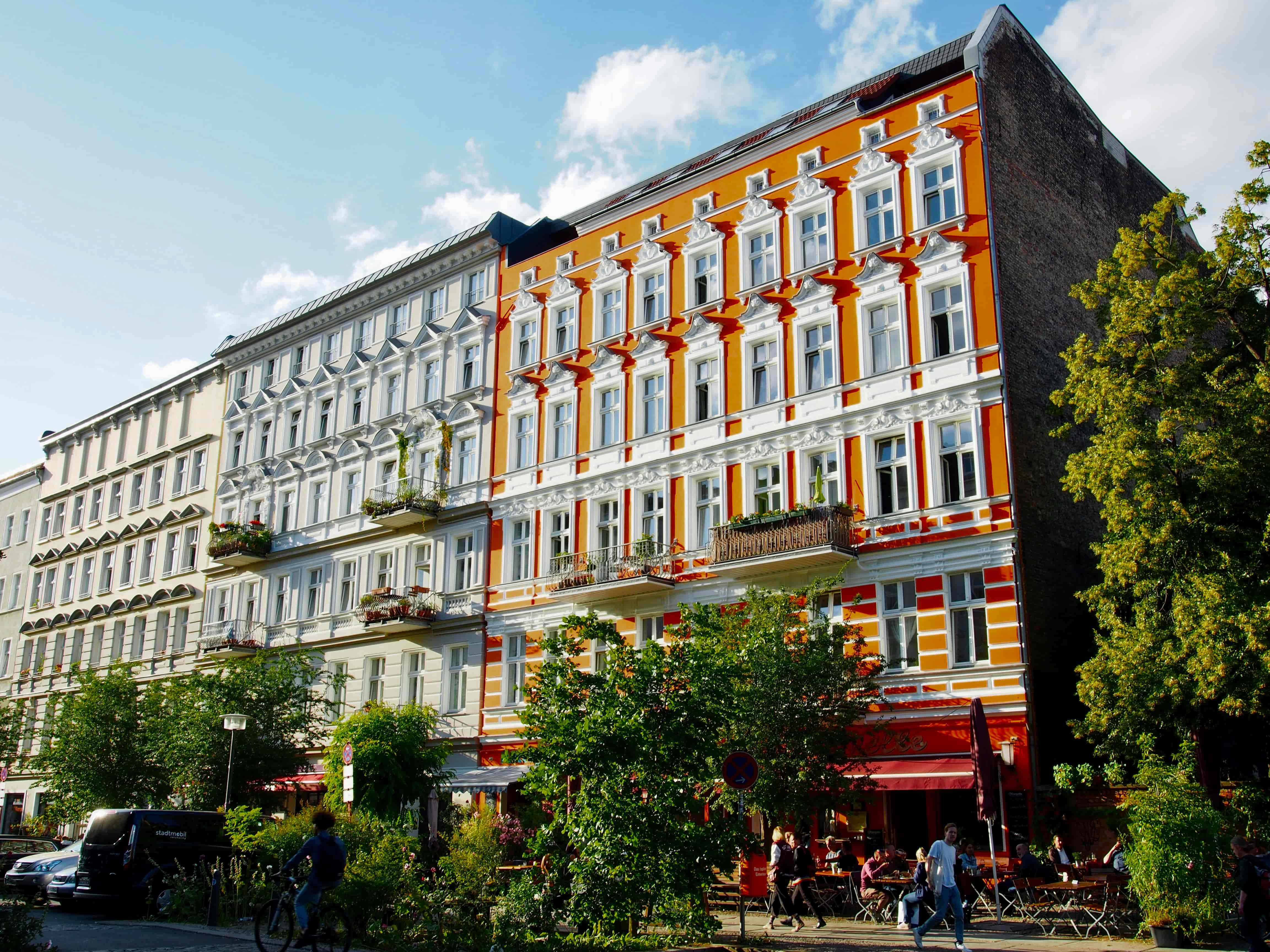
Same Apartment. Two Prices. One Smart Play.
There is a pricing dynamic in Berlin that most international buyers never hear about — and that experienced local investors have been quietly exploiting for years.
Take a two-bedroom Altbau apartment in Prenzlauer Berg. Vacant, move-in ready, it might list at €6,500 per square metre. The identical apartment next door — same floor plan, same building period, same street — but with a long-term tenant inside, paying below-market rent under a protected German tenancy agreement? It sells for €3,500 per square metre. Sometimes less.
Same apartment. Same district. A price difference of up to 40%.
That gap is not a market anomaly. It is a structural feature of Berlin's regulated rental system — and understanding it is the difference between buying impulsively and buying strategically.
Explore Berlin investment properties on Sweet Home
Why the Gap Exists
Berlin has one of the lowest homeownership rates in Europe. Fewer than 20% of residents own their home, which means the vast majority of the city's housing stock sits permanently tenanted, governed by some of Germany's most protective rental laws.
When a tenant holds an open-ended contract — the standard in Berlin — they cannot be removed simply because an owner wants to sell or increase the rent. The tenancy transfers to the new owner. The incoming buyer inherits the tenant, the lease terms, and the rent level. If that rent was set years ago at below-market rates, it stays there until the tenant leaves voluntarily.
That restricted income stream is precisely what drives down the purchase price. Buyers pay for the cashflow they are getting, not the cashflow the property could theoretically generate vacant. The result is a two-tier market — and a spread that has widened significantly since the Mietpreisbremse (rent brake) was extended through 2029, capping rents in new tenancies at no more than 10% above the local reference rate.
As of early 2026, the price ranges in central Berlin reflect this starkly:
- Tenanted period apartments: approximately €2,500–€5,000/m²
- Vacant period apartments: approximately €4,500–€8,000/m²
- Upscale vacant period apartments: €7,000–€10,000/m²
The discount on a tenanted property can reach 30–40% depending on how far below-market the existing rent sits and how long the tenancy has been in place.
The Strategy Behind the Discount
Buying tenanted is not a compromise — for the right investor, it is the whole point.
Here is how the logic works. You acquire a well-located Altbau apartment at a significant discount to vacant market value. The tenant pays rent — below market, yes, but consistent and legally reliable. Berlin's vacancy rate sits at approximately 1.5% citywide, and rental listings average just 28 days on the market. There is no serious default risk in a city where finding housing is one of the hardest things a resident can do.
You hold. You collect income. And eventually — through natural tenant turnover, which is the only realistic route in Berlin's regulatory environment — the apartment becomes vacant. At that point, the asset is re-priced. What you bought at a 35% discount to vacant value is now worth vacant value. The gap between your acquisition price and the market price of the vacant apartment is your capital gain, on top of the rental income you collected along the way.
It is a long-horizon strategy. It requires patience and a clear understanding of what you are buying. But the underlying mechanics are sound — and the entry price advantage is real.
Where This Plays Out: The Districts That Matter
Not every district offers the same risk/return profile on tenanted acquisitions. The spread between tenanted and vacant values is most exploitable where vacant property is genuinely scarce and demand is structurally strong.
Prenzlauer Berg and Friedrichshain-Kreuzberg sit at the premium end. Vacant apartments here are intensely competed for — which is exactly what makes the tenanted discount meaningful. A tenanted Altbau in these districts represents one of the few ways to gain exposure to Berlin's most desirable real estate at anything approaching a reasonable entry price.
Browse Prenzlauer Berg listings on Sweet Home - See Friedrichshain-Kreuzberg properties
Charlottenburg-Wilmersdorf is Berlin's most liquid market by transaction volume, which matters at exit. Tenanted acquisitions here combine the strategy's income mechanics with strong underlying demand for vacant properties when they eventually come to market.
Explore Charlottenburg investment properties
Schöneberg and Neukölln offer a different profile: slightly lower purchase prices, faster tenant turnover historically, and strong underlying rental demand from young professionals. Schöneberg, notably, has the fastest average letting time of any central Berlin neighbourhood — approximately 14 days — which speaks to the depth of demand that supports the long-term hold.
View Schöneberg listings - See Neukölln investment properties
Wedding is worth a separate mention. It carries the highest net rental yield of central Berlin neighbourhoods at approximately 4.5% — and tenanted acquisitions here are where yield-focused investors tend to concentrate.
Browse Wedding properties on Sweet Home
What the Numbers Look Like in Practice
A concrete illustration clarifies the strategy better than any abstraction.
Suppose a 70m² Altbau apartment in Schöneberg is currently tenanted at €9/m² — a legacy rent from a long-standing contract, well below the current market rate of approximately €16–18/m² for the area. At a tenanted valuation of around €3,500/m², the purchase price is approximately €245,000.
The same apartment vacant would trade at around €5,500–€6,000/m² — a value of roughly €385,000–€420,000.
The investor acquires at €245,000. They collect approximately €7,560 per year in rent. They hold. When the tenant eventually vacates — through their own choice, as German law requires — the property is re-let at market rate, or sold at vacant value.
The acquisition discount — approximately €140,000–€175,000 below vacant value — is the embedded upside. It does not show up immediately. It requires the right time horizon. But unlike speculative price appreciation, this upside is structural: it exists from day one, locked into the price you paid.
The Risks — and How Experienced Investors Think About Them
This strategy has real constraints, and ignoring them is how investors get it wrong.
Tenant tenure is unpredictable. Germany's tenancy laws mean a protected tenant can, in principle, remain indefinitely. There is no legal mechanism to accelerate turnover for investment purposes. The strategy works on average — not on a guaranteed timeline.
Personal use eviction (Eigenbedarfskündigung) is possible but narrow. A landlord can terminate a tenancy on grounds of genuine personal use — for themselves or close family members. Courts examine this rigorously, and abuse of the provision carries legal risk. It is not a shortcut.
Below-market rents cannot be raised freely. Under the Mietpreisbremse and the rent increase cap (Kappungsgrenze), rent increases on existing tenancies in Berlin are limited to 15% over three years and must stay within the local reference rent. Closing the gap between legacy rent and market rent takes years even when increases are applied.
Energy performance is increasingly material. Older Altbau stock — the asset class most commonly acquired as tenanted investment property — carries growing renovation obligations and CO₂ cost exposure under Germany's Building Energy Act. Always review the Energieausweis before acquisition and model the potential cost of future energy upgrades.
The investors who do well here go in clear-eyed: they are buying a long-duration asset with a known discount, not a quick trade.
One More Dynamic Worth Watching in 2026
Berlin's conversion ban (Umwandlungsverbot) — which prohibited the conversion of rental apartments into owner-occupied condominiums in buildings with five or more units — has been extended through 2030. But apartments that were converted in earlier windows are now beginning to exit their statutory seven-year sales restriction periods.
Over 11,000 apartments were converted in 2018 alone, with concentrations in Neukölln, Friedrichshain, and Wilmersdorf. As those restrictions expire through 2025 and 2026, a cohort of centrally located apartments will enter the open market for the first time in years. Many will be tenanted. Buyers who understand the tenanted/vacant dynamic — and can evaluate these properties correctly — are well positioned to move on them before the broader market catches up.
Conclusion
Berlin's two-price market is not a secret to those who know where to look. It is the product of a deeply regulated, highly tenant-protective legal system — and it creates a genuine, quantifiable entry advantage for buyers willing to buy at the tenanted price and hold for the vacant value.
The discipline required is timing and patience. The reward is acquiring well-located Berlin real estate at prices that, in some cases, are 30–40% below what a vacant buyer would pay for the same property.
That is not a small edge. In a city with a 1.5% vacancy rate, rising rents, and structurally inadequate new supply, it may be the most reliable path into the market that currently exists.
Sweet Home works with international buyers who want to navigate exactly this kind of opportunity — identifying the right tenanted assets, stress-testing the numbers, and managing the process from search to signature.